Alessandro Volta
Life, discoveries and context
A genius from Como
Reading about Alessandro Volta’s life means understanding which experiences, curiosities and personal choices made possible a scientific journey capable of influencing modernity. Born in Como and active during the Enlightenment, Napoleonic era and Restoration, Volta combined experimental rigour with the ability to imagine future applications of electricity.
Origins and early years
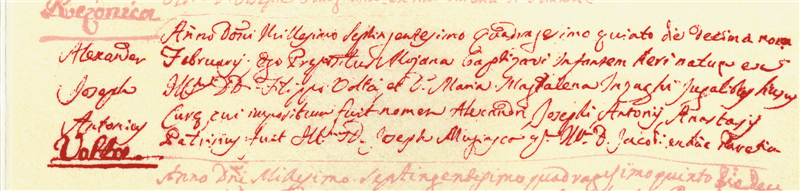
Alessandro Volta was born in Como on 18 February 1745, the son of patrician Filippo Volta and Maddalena Inzaghi. His childhood was marked by a very late start in language acquisition, which worried his family, but which resolved itself with complete fluency around the age of seven. Even as a child, he showed an intense curiosity about natural phenomena, often pushing himself beyond what was prudent.
Birth certificate of Alessandro Volta kept in the parish church of S. Donnino in Como
Studies and scientific vocation
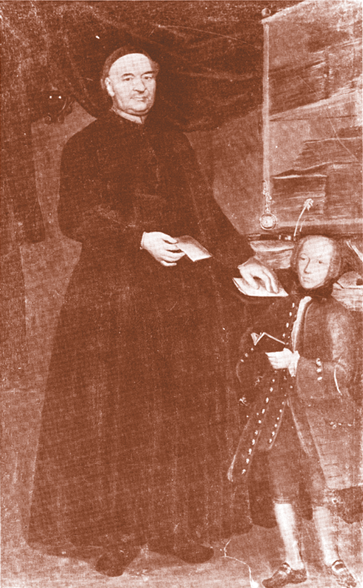
After his initial studies at home, Volta attended Jesuit schools and then the Seminary. Attempts to steer him towards the priesthood or legal studies failed: his path lay in science. Self-taught by vocation, he studied the great authors of the time and, at only eighteen years of age, wrote letters to Nollet and Beccaria, already demonstrating method, critical thinking and observational skills.
Probable portrait of the young Alessandro Volta with the Jesuit Gerolamo Bonesi (oil painting attributed to Martin Knoller, 1725–1804).
Gattoni's workshop
During his early experiments and formative years, Volta “built” physics even with limited resources: household objects, resins, cloth, wires and insulating materials. From 1765, thanks to the laboratory set up by his friend Gattoni and made available to him, he intensified his experimental activity and measured himself against the European scientific community. At the age of 24, he published his first important memoir, often choosing Italian and French and the quick form of the “epistolary memoir”.
The Gattoni Tower
Pavia e l’insegnamento
In 1778, Volta was appointed professor of experimental physics at the University of Pavia. His lectures attracted so many students that a larger physics theatre had to be built. The prestige he acquired placed him among the “renowned figures” involved in the revival of the university and in the season of reforms promoted by the Habsburg government.
The Volta Lecture Hall at the University of Pavia
Travel and the European network
Volta travelled much more than many Italian scientists of his time: he sought out exchanges, carried instruments, measured altitudes, pressures and air quality, and built international scientific relationships. Between 1781 and 1782, he travelled through Switzerland, Germany, France and England; in 1784, he set off again with Antonio Scarpa. These journeys consolidated his European network and his reputation.
The man behind the scientist
Volta is described as brilliant, energetic and pleasant to talk to: he argues passionately, gets irritated when experiments fail and lights up when they succeed. Despite his fame, many biographers highlight a recurring quality: modesty, combined with a willingness to engage in discussion and attention to students and colleagues.
Volta with electrical instruments, including an electroscope
Family and private life
In 1794, he married Maria Teresa Peregrini and built a domestic life that remained central even during moments of great public recognition. His letters often reveal his desire to return home, far from “vain glory”, to embrace his wife and children. Before his marriage, he had had a loving relationship with the singer Marianna Paris, but it did not lead to marriage.
Donna Teresa Peregrini, wife of Alessandro Volta
Awards, retirement and final years
Between 1801 and 1810, Volta received important awards and honours, partly at Napoleon’s instigation. After the fall of the Empire, he went through a turbulent period but was called back to Pavia by the Austrian government and then gradually retired. In 1819, he left the public scene for good and died on 5 March 1827.
Alessandro Volta in his old age (oil painting by unknown artist; Camnago, Volta family)
The context
The time of Volta
Volta’s life spanned a period of transformation in Europe: from the Enlightenment and the Habsburg reforms to the Napoleonic era and the Restoration. Understanding this context helps us to better understand his choices: the role of universities, the circulation of scientific ideas and the growing importance of experimentation as proof.
Nineteenth-century view of the city of Como (chromolithograph by George Barnard)
From the Enlightenment to Napoleon
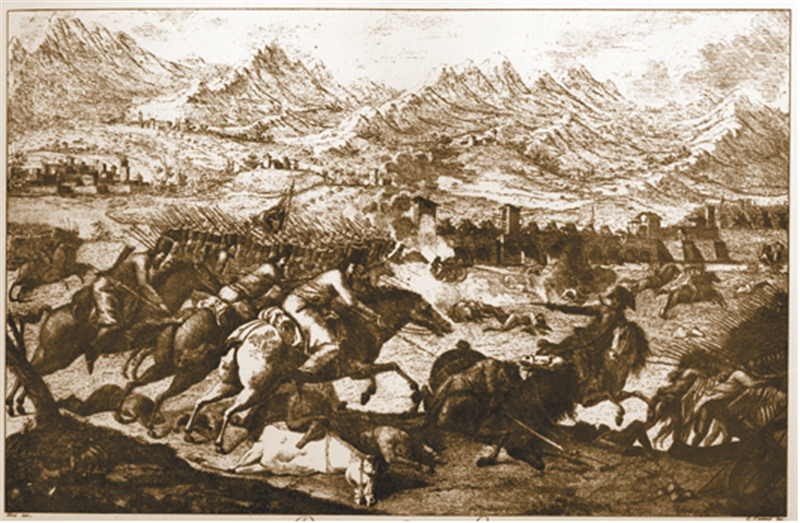
During the Age of Enlightened Despotism, Europe underwent reforms and saw the establishment of new institutions. The 1780s brought upheaval: the French Revolution and new political ideas. In 1799, Volta invented the battery and presented it to Napoleon in 1801. During these years, Lombardy underwent a profound transformation that also affected universities and research.
Battle of Lecco, fought between the Russian and French armies on 26 April 1799
Restoration and final years
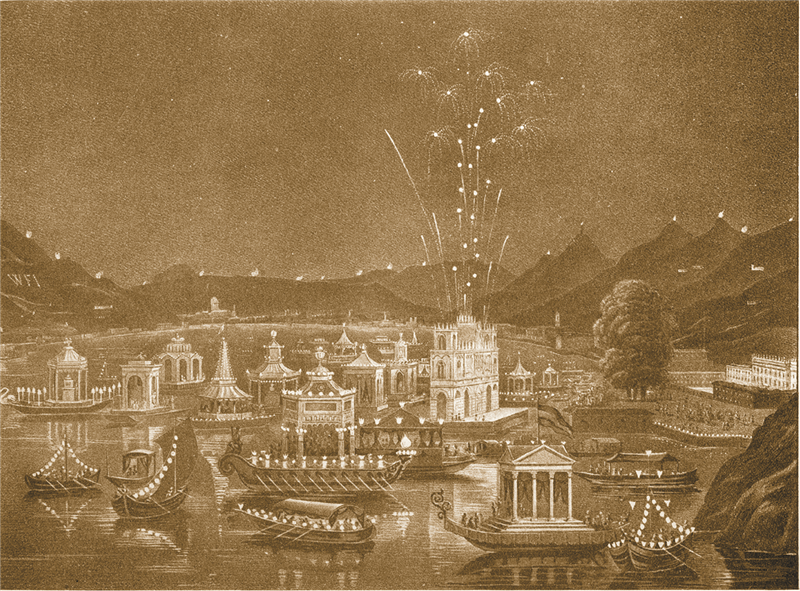
After 1815, Lombardy returned to Austrian rule and cultural institutions were subject to stricter control. Volta, already in retirement, devoted himself increasingly to his private life until his death in 1827. This marked the beginning of a long process of public remembrance, celebrations and museumisation that continued into the 20th century and beyond.
Fireworks display and illumination of Lake Como in front of Villa Raimondi (Villa Olmo) in honour of the Emperor and Empress of Austria on 28 August 1838.